Introduction
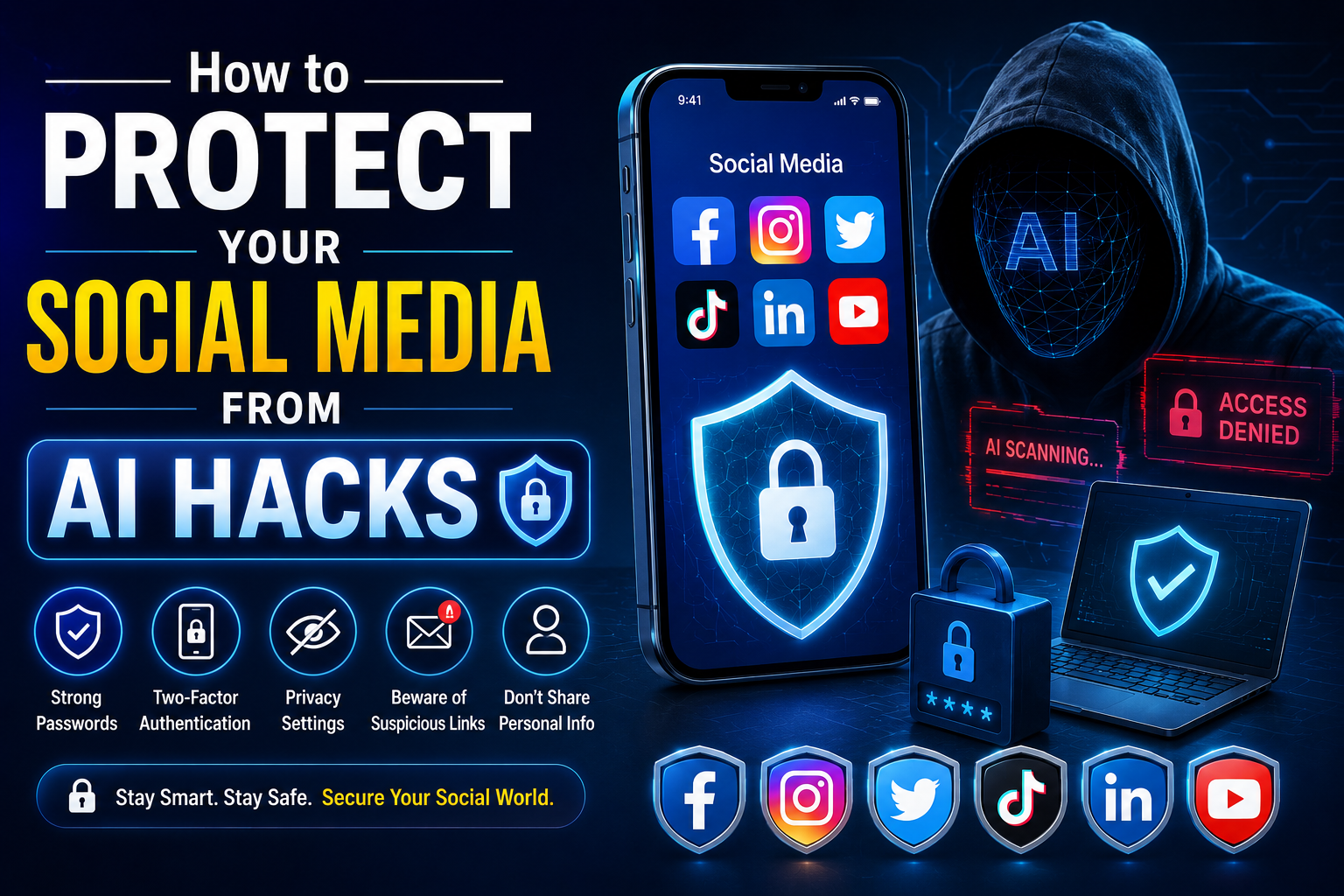
Hackers have increasingly utilized artificial intelligence (AI) for stealing data from their targets by breaking into their social media accounts using AI. With today’s focus on social media, it has evolved beyond uploading and sharing pictures to now being used to launch and manage businesses and make personal income; therefore, keeping your account secure has never been so important.
Understanding AI Social Media Hacks
Artificial intelligence hacking and classic style hacking diverge in many ways. Classic hackers typically hack manually by focusing on one individual account at a time, while AI hacks through software that scans numerous individuals at once in just seconds. AI learns a user’s behavior by monitoring their clicks and writing styles, allowing the AI to build fake messages, fake profiles, and/or fake alerts using the information it collects. Many users are deceived into believing the agent is real because he/she presents familiar-looking links.
How AI Social Media Hacks Target Accounts
The use of artificial intelligence (AI) can help identify and exploit vulnerable user accounts through public profiles, the use of and/or reuse of, old passwords, the use of out-of-date or inactive security features, and the use of an email for multiple accounts. To do this, the AI will analyze a user’s social media content as well as their previous interactions with other users. The results are personalized messages, in some cases posing as support from the social media platform, to others posing as friends or brands, all of which appear credible and trustworthy because AI can analyze language structure.
Risks of AI Social Media Hacks on Your Account
People believe their account is too small to ever be the target of hacking. This is incorrect; small accounts are generally easier targets than large ones because they do not have the same level of security. Once hacked, you can have your account compromised by only using it to commit fraudulent acts, post fake advertisements or create illegal links. For businesses, the ramifications of having their accounts hacked can result in a loss of consumer trust and revenue. The process of recovering from a hacked account can often take longer than anticipated, be difficult, and cause additional stress.
The Importance of Strong Passwords
Having a password is the most vital thing to keep you safe, but if you have a weak password, it is very easy to breach your account. What constitutes a strong password? A long, unique and a password that does not contain your name, birthday or common words. Reusing your password across multiple sites adds additional risk because if a site were to be compromised, all accounts linked to that site would be unsafe. Finally, regularly changing your passwords gives you one more way to protect yourself.
Two Step Verification as a Safety Shield
Adding strong security to your account through two-step verification is necessary; even if an AI guessed your password, it wouldn’t be able to log into your account without first providing an additional code. This code is typically sent to your phone or email, and there are many people who overlook this; however, enabling this feature will mostly stop automated attacks. It typically only takes a few minutes to turn on, saving you a lot of hassle down the line.
Securing the Email Linked to Your Account
Your email address acts as the control centre of your social media accounts and all of your password resets, notifications and confirmations for these accounts will pass through your email. Therefore, if someone keeps your email address they will also have access to your social media accounts. Make sure to have a strong password for your email account and turn on 2-factor authentication as well. Don’t use the same password for email and social media accounts. Continue to check for email account security breaches, sign in activity and recovery options.
Recognizing AI Social Media Hack Scams
AI fraud messages can be persuasive, urgent and courteous. For example, you might receive a fraudulent message regarding account suspension or help to verify your identity. Certain messages even contain links that appear authentic. Never trust a message — stop to think before clicking on any links, look at the sender name closely (if available) and always go directly through the official app/website rather than from a link in a message. A moment’s thought could save you from losing access to your account.
Managing Privacy Settings Wisely
AI is able to utilize additional data from public profiles. Limiting the amount of data visible will assist you in reducing your risk of potential harm. Personal details such as your email and phone number should be hidden. You can manage who is allowed to send you messages, comment on your posts, or tag you by controlling the privacy settings. Review your privacy settings at least every few months to ensure that they still provide appropriate protection for you against potential harm from the changed settings of the platform.
Keeping Devices and Apps Updated
There are security issues with older devices and apps. Weaknesses in older apps/devices can be identified by using AI tools. Updated apps/devices address these issues and provide additional security features. Therefore, always make sure that the versions of your social media apps, browsers, and mobile operating systems you are currently using are the most current. As a precaution, do not access your accounts on shared/public devices this includes working on your business profiles.
Protecting Business Accounts From AI Social Media Hacks
Business accounts attract many more attempts at compromise, especially due to their value. Do not share your login information with multiple individuals instead take advantages of roles to provide them access instead. Be sure to remove access from anyone who no longer works with the company. In order to provide proof of ownership when recovering from a compromised account, store ownership documents such as email correspondence or invoices related to the account or details from the page itself. All of these items will allow for much quicker recovery from a compromised account.
Staying Alert to Unusual Activity
Do not take lightly an early indication of being hacked. Login alerts from unrecognizable locations, altered profile info, or messages sent from your account that you didn’t send are all signals to be alert to change the password, logout of all your sessions and contact support provides [platform] immediately after having acted. The faster you respond the less damage will occur to you as a result.
Building Long Term Social Media Safety
To maintain social media security you must practice good habits. You should regularly be cautious when clicking links, updating your privacy settings as needed, and keeping up to date with new threats. Artificial Intelligence (AI) will continue to advance; however, smart users will be able to stay ahead of these developments. Being aware of and consistently following the right practices will provide the best protection against them.
Keeping Your Digital Presence Protected
You represent yourself through your social media profile, and having no control over your profile could lead to losing your identity and income through the use of AI hacks. However, there are ways to help limit the access that AI may have on social media if you take these actions and remain vigilant in keeping track of your account. Protecting your account also means to protect who you are as an individual within the online community.