What Is Digital Money?
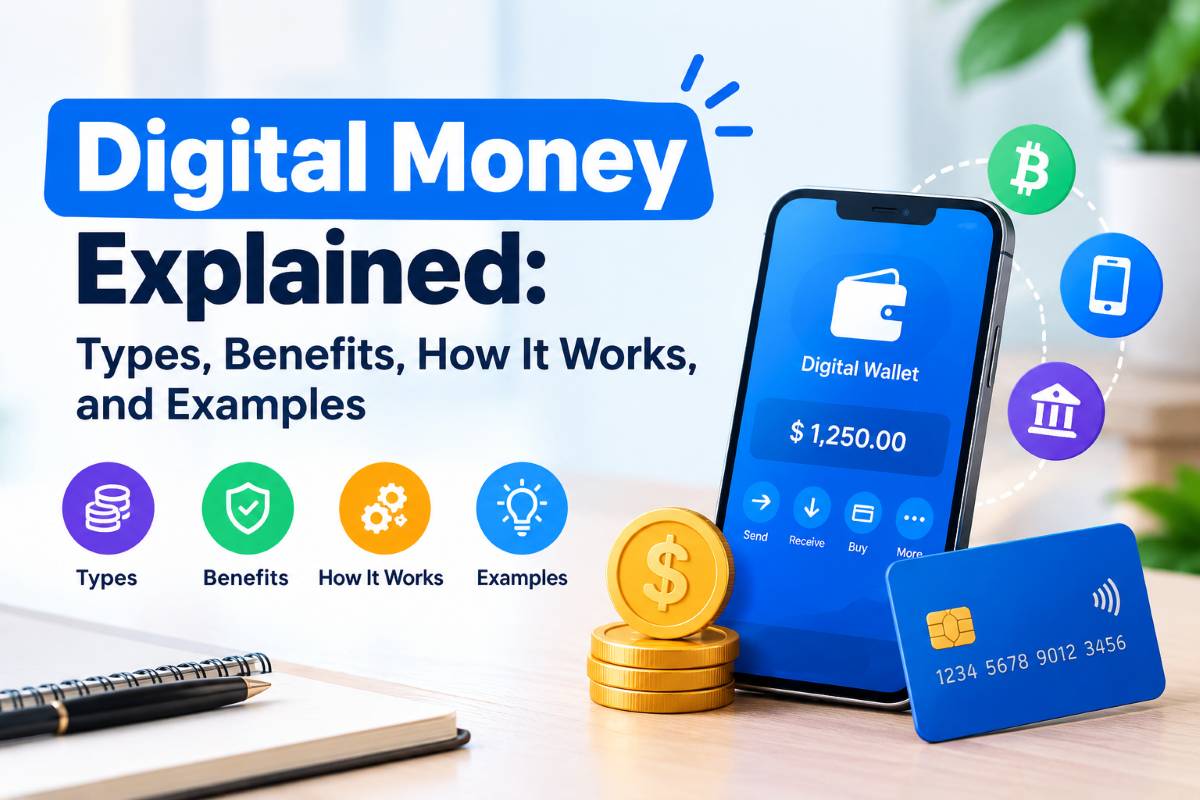
Digital money is money or monetary value that is stored, transferred, and managed electronically rather than exchanged as physical banknotes and coins. You can use it to shop online, pay bills, send money to friends, receive your salary, or make purchases through a smartphone. Unlike cash, digital money does not need to be physically handed from one person to another. Instead, electronic systems record and process transactions between accounts, wallets, or digital addresses.
Think about the last time you paid for something using a debit card or a mobile banking app. Although you did not hand over any cash, the payment still transferred value from one party to another. This is a common example of digital money in everyday life. Digital money includes bank account balances, electronic money, and certain digital currencies, although these forms differ in how they are issued, regulated, and protected.
How Does Digital Money Work?
When you send money through a banking app, for example, your bank checks the payment details, confirms that sufficient funds are available, and processes the transfer. The recipient’s account is then credited according to the payment system’s rules. Depending on the service, this process can take seconds or longer.
Different types of digital money use different technologies. Traditional bank transfers rely on banking infrastructure, while mobile wallets connect users to electronic payment services. Cryptocurrencies such as Bitcoin use blockchain technology, which records transactions on a distributed ledger maintained by a network of participants. Regardless of the technology, the basic idea is similar: a digital system records who owns or receives value and helps prevent unauthorized or duplicate transactions.
Types of Digital Money
1. Digital Bank Money
Digital bank money is the balance you hold in a traditional bank account. You can access it through online banking, debit cards, ATMs, and bank transfer services. For example, if your employer deposits your monthly salary into your account, the money is available electronically even though you do not receive physical banknotes.
This is one of the most familiar forms of digital money because it supports everyday spending, savings, and business payments.
2. Mobile Wallets and Electronic Money
Mobile wallets and electronic money services allow people to store value or access payment services through digital accounts. Depending on the provider, you may be able to transfer money, pay utility bills, purchase mobile credit, or pay participating merchants.
In Pakistan, services such as Easypaisa and JazzCash are familiar examples of mobile financial services.
3. Cryptocurrencies
Cryptocurrencies are digital assets that use cryptographic techniques to secure transactions. Many operate on decentralized blockchain networks rather than being issued by a central bank. Bitcoin and Ethereum are well-known examples, although Ethereum’s native asset, Ether, is generally used for transactions and network operations rather than functioning like ordinary national currency.
Cryptocurrency prices can fluctuate sharply, and users may face fraud, security, and regulatory risks. Unlike ordinary bank deposits, crypto holdings generally do not have the same protections.
4. Stablecoins
Stablecoins are digital assets designed to maintain a relatively stable value, often by referencing a currency such as the US dollar. Some are backed by reserve assets, while others use different mechanisms. Examples include USDC and USDT.
However, a stablecoin is not automatically risk-free. Its reliability depends on factors such as the quality of its reserves, redemption arrangements, issuer practices, and market conditions.
5. Central Bank Digital Currencies (CBDCs)
A central bank digital currency (CBDC) is a digital form of money issued by a country’s central bank. Unlike privately issued cryptocurrencies, a CBDC represents a direct liability of the central bank under its design and legal framework.
CBDCs are being explored or developed in different countries for potential uses such as digital payments and improving payment infrastructure. Their availability and features vary by country.
Real-World Examples of Digital Money
Digital money is already part of daily life. Paying for an online order using a debit card, transferring money through a banking app, or receiving funds in a mobile wallet are all practical examples. Freelancers may receive payments electronically from international clients, while businesses can accept digital payments without handling cash.
Cryptocurrency transactions provide another example, although they work differently from conventional bank payments. Each example demonstrates how technology can move or record value electronically.
Benefits of Digital Money
Digital money offers several advantages. Convenience is one of the biggest: you can make payments without carrying cash or visiting a bank branch. Electronic transfers can also help people and businesses send funds across long distances, maintain transaction records, and manage payments more efficiently.
Digital payment services may also improve access to financial tools for people who can use a phone but live far from traditional banking facilities. For businesses, digital payments can simplify accounting and reduce some cash-handling tasks. However, these benefits depend on reliable internet or network access, suitable devices, affordable fees, and appropriate consumer protections.
Risks and Challenges of Digital Money
Cyberattacks, phishing messages, fake payment links, and stolen passwords can expose users to financial loss.
Privacy is another concern because many electronic payments generate records of transactions. Users should choose reputable services, enable two-factor authentication where available, use strong passwords, and never share PINs or verification codes. It is also important to check transaction fees and understand whether a service offers deposit protection or a process for resolving disputed payments.
The Future of Digital Money
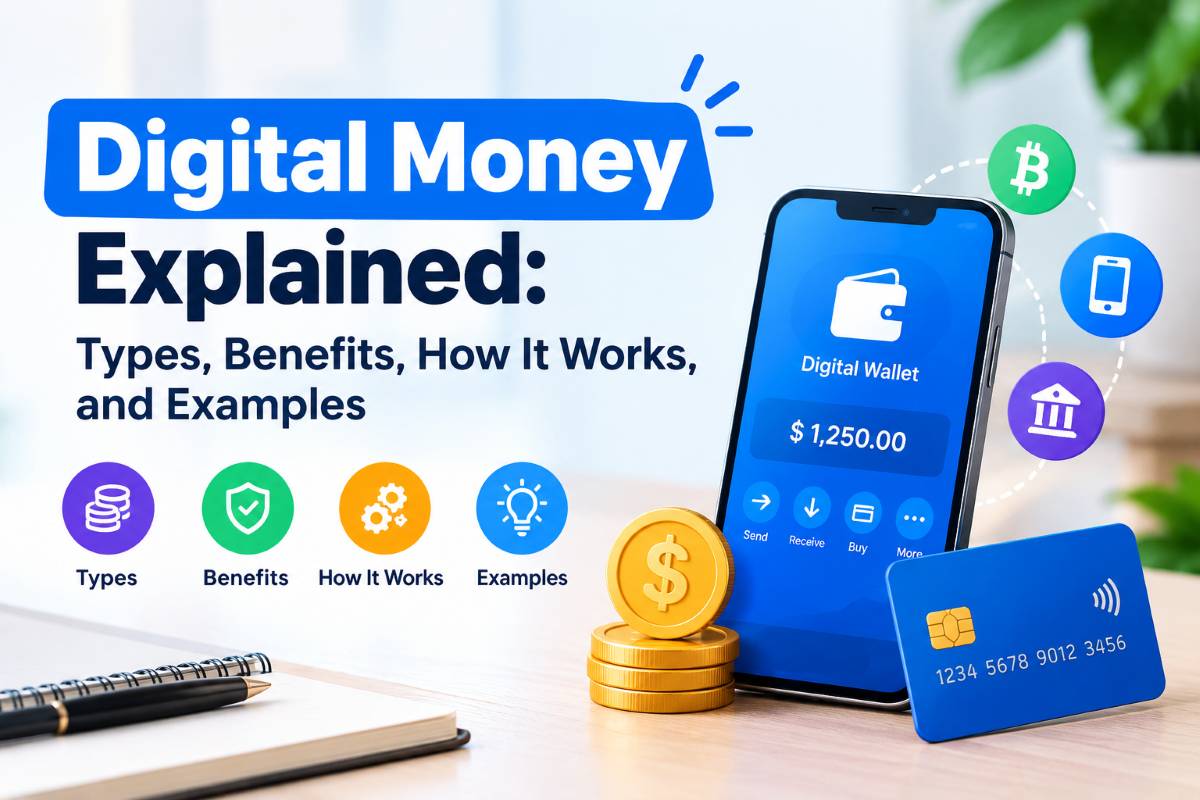
The future of digital money will likely involve continued improvements in payment speed, security, and accessibility. Mobile wallets, instant bank transfers, and digital payment platforms are already changing how consumers and businesses handle everyday transactions. Meanwhile, central banks continue to explore whether digital currencies could complement existing forms of money.
Emerging technologies may also make international payments more efficient, although regulation, privacy, cybersecurity, and financial stability remain important challenges. The direction of change will depend on how governments, financial institutions, technology companies, and consumers respond to these issues.
Conclusion
Digital money is transforming the way people store, send, and spend money. From traditional bank accounts and mobile wallets to cryptocurrencies, stablecoins, and central bank digital currencies, it offers several ways to transfer value electronically. Its convenience can save time and simplify payments, but security, privacy, fees, and financial risks should never be ignored.
Understanding how digital money works helps you make informed decisions about which services suit your needs. Whether you are shopping online, running a business, or receiving payments from clients, using reliable platforms and following good security practices can help you benefit from the growing digital economy.
Frequently Asked Questions (FAQs)
Digital money is money or monetary value that you access and transfer electronically instead of handling physical notes and coins.
Examples include bank account balances, mobile wallet balances, electronic money, Bitcoin, and stablecoins such as USDC. These differ in how they are issued and protected.
No. Digital money includes conventional bank balances and electronic payment balances, while cryptocurrency is a specific category of digital asset that often operates on decentralized networks.
It can be safe when you use reputable providers and secure your accounts. However, scams, unauthorized access, technical problems, and provider-specific risks can lead to losses.
Not necessarily. Digital payments are becoming more common, but cash remains useful for people who lack access to digital services and for transactions when electronic systems are unavailable.