What to Expect Next
AI is becoming reality now, as evidenced by the increasing use of AI within everyday life whether it be through our smartphones/cars or during the shopping/health care experiences. AI will grow exponentially between now and 2026, becoming more intelligent, personalised and integrated into our daily lives; these advances will impact the way we interact with businesses and manage our own lives in both positive and negative ways.
In this, I will discuss the potential effects that AI will have on society in 2026 including both the opportunities and challenges presented by this exciting technology.
How AI Has Reached This Point
Artificial Intelligence (AI) began as basic automating, and rule based systems. As time has gone by, it has become smarter, able to analyze data, understand language, and identify images. Now AI can produce written content, create artistic objects, diagnose illness, and operate vehicles.
In 2026, AI’s rapid development is projected to continue. Enhanced hardware, expanded data sources, and improved algorithms will drive greater advancement of AI applications. While currently reacting only to inputs, future iterations of AI will offer predictions, assist with decision making, and adapt its function based upon prior interactions and changing inputs in real-time.
Smarter and More Human Like AI Systems
The way that we communicate with natural AI in 2026 will have a greatly improved “human” element. Natural AI will be able to help you with many things, including how you communicate; how you express yourself; and the context, tone, & location of your communication to others.
One way that natural AI can help is by being able to recall information for you, give suggestions about what things to do, and assist you in creating your daily plans. For instance, natural AI could help you with your daily plans for the week by working with you and managing your schedule, keeping track of your goals, and providing feedback and/or making suggestions for your future plans based on your past behavior.
By having this ability to connect on a more personal level with an individual has shifted the concept of what it means to have an AI “tool” into having a digital assistant.
AI in Daily Life and Personal Use
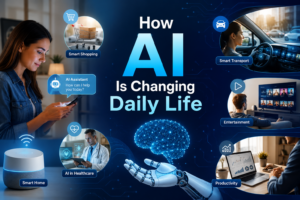
AI will have permeated all aspects of daily living by 2026. Homes will continue to get smarter with appliances, lighting, heating/cooling, security systems, and electricity being automatically adjusted according to user habits.
Shopping will evolve too; shoppers will benefit from more personalized product recommendations from AI by analyzing shopping behavior, budget, and timing. Online experiences will feel more unique to the buyer and will spend less time looking for products or services.
Entertainment will also continue to change with the help of AI, creating personalized playlists, TV shows and video games based on the consumption habits of each user.
AI in Health Care and Medicine
By 2026, Health Care will be the area of AI growth that occurs most in the number of implements. Thousands of AI apps will help doctors to most accurately and quickly find out about a patient’s health through images, reports from full-length studies, and patient records.
Tracking your personal health will grow with advancements in AI. Wearable devices equipped with AI will track things such as your heart rate, sleep, and stress. These devices can notify you of potential health risks long before they become serious.
Doctors will not be replaced by AI, but it will support their work in providing better care at lower costs with faster results.
The Role of AI in Education
With the increasing prevalence of artificial intelligence, the education system will undergo massive transformations. Personalized instruction will be provided to students as a result of the capability of AI tutors to modify instruction to meet the individual student’s rate of growth and progress through the curriculum.
Instead of a single, linear pathway to learning, there will be multiple ways to learn and develop. AI will provide students with suggested learning materials, practice problems, and test-taking strategies based on the individual student’s specific needs. Teachers will use AI to measure their students’ growth and learning and to help them focus their instruction on areas of concern.
As a result, by 2026, the education system may be significantly more flexible and accessible to learners of all ages.
AI and the Future of Work
AI will transform the workplace in a number of ways. Many of our current day-to-day tasks – such as data entry, scheduling, and basic analysis – will be automated, giving workers greater capacity to do creative and strategic work. As new roles and industries emerge, such as those that focus on managing, training, and developing ethics for the use of AI, people will need to learn how they can work together with AI rather than competing against it.
AI in Business and Marketing
By 2026, AI technology will have a major impact on the way companies operate. For example, most customer service departments will be using AI chatbots that can provide rapid and accurate assistance to customers. On the marketing side, many companies will be making data-based decisions and employing AI systems to predict future trends and consumer behavior.
Additionally, small businesses will benefit significantly from using AI as they will have access to tools that were previously considered too expensive. This will provide New Business Start-Ups with equal or better access to Smart Automation and intelligence as other companies.
Ultimately, AI will help businesses improve overall decision making; decrease waste and enhance customer experience.
Ethical Challenges and AI Safety
As the use of artificial intelligence continues to evolve, we expect that the questions around ethical use and safety will also evolve with it. The issues surrounding data privacy, bias, and improper use will become increasingly important as the use of AI systems becomes more prevalent over time (2026). Governments and companies will likely begin implementing policies and regulations to address some of these concerns.
Developers of AI systems will need to be able to provide systems that are unbiased and provide transparent access to their data. Consumers will want to feel that they have control over their personal information as it relates to AI systems.
A key to developing trust in AI systems is the demonstration of an AI system that will uphold the privacy of users’ data and provide a clear rationale for all decision-making. If AI systems can demonstrate both privacy and transparency, it is likely that they will gain much greater user acceptance.
AI and Creativity
AI has been generating soundtracks, paintings, and text since 2020. By 2026, its creativity will enhance significantly. Rather than being a replacement for artists, writers, and designers, AI should enhance their craft.
The amount of time required to use creative tools will be reduced, and there will be greater flexibility in their use. For example, a designer could describe a concept, and AI could convert that description into images in seconds. Similarly, writers could use AI for brainstorming or rewriting.
This collaborative effort between humans and AI will produce new types of creative works.
Impact of AI on Society
The way individuals interact, exchange information they have and how they think will change because of AI. Language Translation through AI will make it easier for people from different countries to communicate with one another. AI also has potential to expand access to information for those who are located in remote areas.
Society will face challenges such as job loss as a result of AI; to this end, addressing issues like the digital divide will require attention as well since not everyone is able to adapt to technological changes at the same pace and therefore, the use of education is essential to minimizing the impact of job loss on individuals’ lives.
AI has the potential to impact society positively by creating a more connected and knowledgeable population if used responsibly.
What Businesses and Individuals Should Do Now
The preparation for utilizing AI in 2026 begins now. Individuals need to begin learning all types of new skills that are creative, assistive in solving problems and utilizing technology.
Companies need to begin the test of using AI tools at a slow pace, including testing employees, creating clear goals, and gaining experience in using them recognizes the ethical and transparent use of AI while using and implementing any type of AI Example of Work Plan.
Those individuals that start utilizing AI now will have a competitive edge in the future.
The Road Ahead for AI in 2026
2036 is predicted to be a powerful and promising year for artificial intelligence. AI will continue to become more useful, personal and present in people’s everyday lives. AI will revolutionise the way people work, learn and communicate with the world.
However, AI also requires careful planning and responsible use. As an AI tool, it will have the capability to create significant changes; therefore, decisions made by society will determine how AI will function in the future.
The next few years will certainly determine the impact of artificial intelligence on our lives for many years to come.