What Is Digital Marketing?
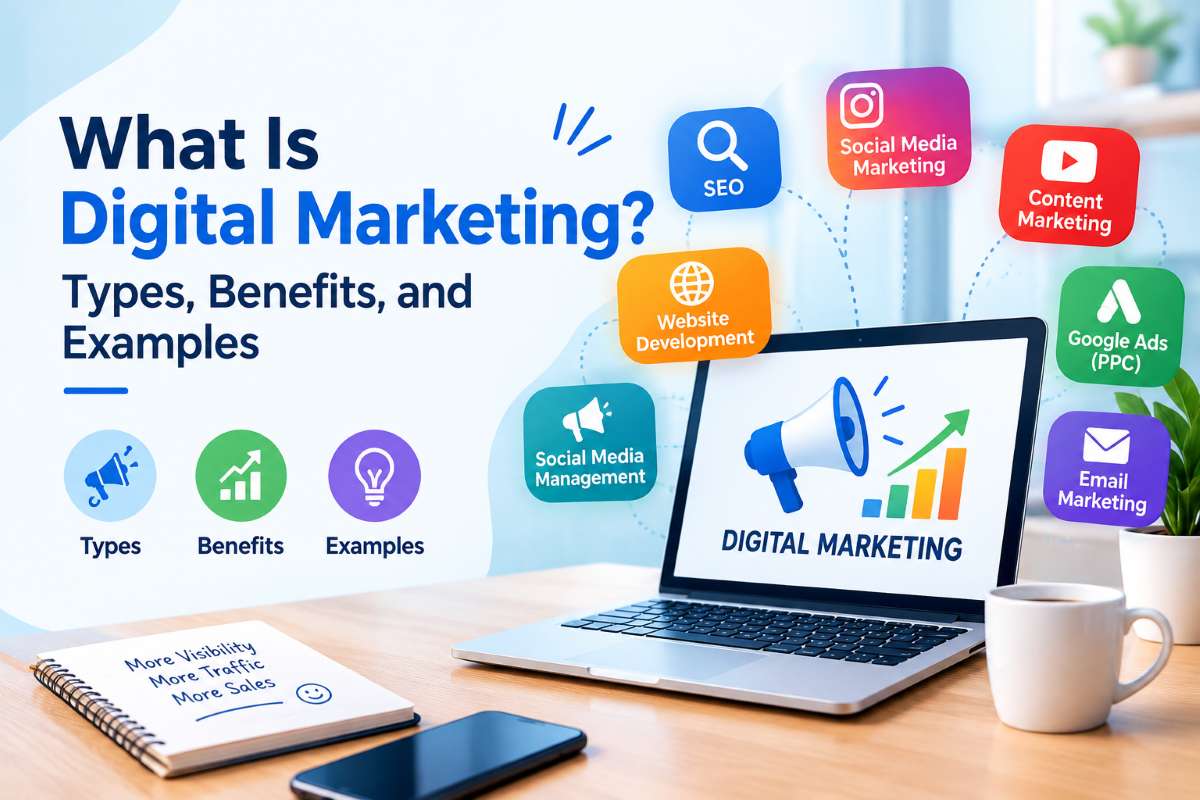
Digital marketing is the process of promoting products, services, and brands through online platforms and digital technologies. It includes activities such as optimizing websites for search engines, publishing helpful content, running social media campaigns, sending marketing emails, and displaying paid advertisements.
For example, a small clothing store can use Instagram to showcase new collections, Google to attract people searching for clothing online, and email newsletters to inform existing customers about special offers. These activities help the business connect with potential buyers at different stages of their purchasing journey.
Why Is Digital Marketing Important for Businesses?
Digital marketing helps businesses increase brand awareness, attract relevant visitors, generate leads, and build stronger relationships with customers. One major advantage is flexibility. Businesses can start with a small budget, test different campaigns, and invest more in the methods that deliver the best results.
Another benefit is measurable performance. Tools such as website analytics and advertising dashboards can help marketers understand how many people visited a website, clicked an advertisement, submitted a form, or completed a purchase. This information makes it easier to improve campaigns over time instead of relying entirely on guesswork.
For small businesses, freelancers, and growing companies, digital marketing also creates opportunities to compete with larger brands. A useful website, a clear message, and a consistent online presence can help a business reach customers beyond its immediate location.
Key Types of Digital Marketing
1. Search Engine Optimization (SEO)
Search Engine Optimization (SEO) helps websites appear in unpaid search engine results when people look for relevant information, products, or services. For example, a digital marketing agency can publish an article targeting the keyword affordable SEO services to attract business owners searching for professional help. SEO generally takes time, but consistent improvements can help a website attract relevant traffic over the long term.
2. Content Marketing
Content marketing focuses on creating valuable content that educates, informs, or entertains a target audience. Blog posts, videos, guides, case studies, and infographics can answer customer questions while building trust in a brand. For instance, a fitness coach might publish workout guides and nutrition tips to attract potential clients. Helpful content gives people a reason to engage with a business before they are ready to purchase.
3. Social Media Marketing
Businesses can share educational posts, short videos, customer reviews, and behind-the-scenes content to encourage engagement. A clothing brand, for example, can showcase new arrivals through Instagram Reels and use customer feedback to build credibility. According to HubSpot’s 2026 marketing research, social media remains an important channel for brand awareness and customer engagement.
4. Pay-Per-Click Advertising (PPC)
Pay-per-click advertising (PPC) allows businesses to display paid advertisements and pay when someone clicks, depending on the advertising model. For example, a local web design agency might advertise its website development services to people searching for a professional designer. Success depends on targeting, ad quality, landing pages, and budget management.
5. Email Marketing
Email marketing involves sending newsletters, promotional offers, product updates, and personalized messages to subscribers. It helps businesses maintain relationships with existing customers and encourage repeat purchases.The key is to deliver relevant content rather than overwhelming people with unnecessary messages.
6. Affiliate and Influencer Marketing
Affiliate marketing allows businesses to reward partners for bringing in customers or generating leads through referral links, while influencer marketing involves partnering with content creators to promote products or services to their followers. For example, a skincare company might partner with a beauty creator to demonstrate its products, while an affiliate blogger earns a commission from qualifying purchases made through referral links. Both methods can expand reach when partnerships align with the audience and brand.
Popular Digital Marketing Channels
Common options include search engines, websites, social networks, email, video platforms, and online advertising networks. The best combination depends on the business, target audience, and available budget.
Real-World Digital Marketing Examples
Imagine a small bakery that wants more local customers. It could optimize its website for local searches, post attractive cake videos on Instagram, and send email offers to customers who have subscribed to its newsletter. A software company, meanwhile, might publish educational blog posts, run Google Ads, and share professional insights on LinkedIn to generate business leads.
Building a Successful Digital Marketing Strategy
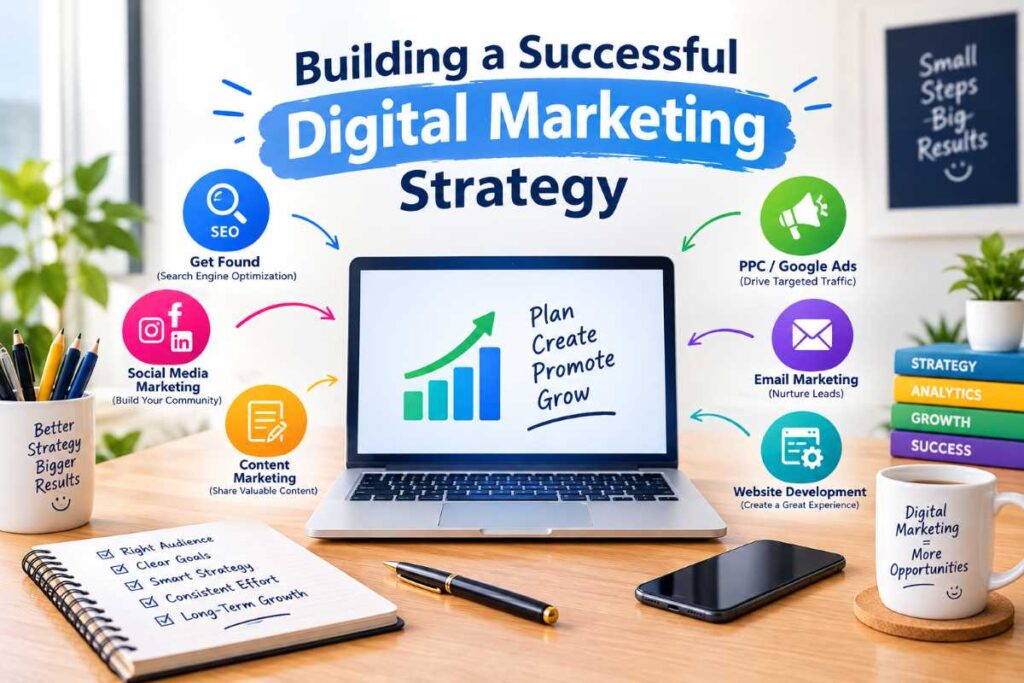
Start by identifying your ideal customers and the results you want to achieve. Choose channels that match your audience’s habits, establish measurable goals, and track performance regularly. Avoid spreading your budget across every platform at once. Instead, test a few suitable channels, evaluate the results, and improve your strategy using reliable data.
Common Digital Marketing Mistakes to Avoid
Common mistakes include targeting the wrong audience, publishing inconsistent content, ignoring mobile users, and focusing on likes instead of meaningful business results. Another problem is expecting immediate results from strategies such as SEO that require time and ongoing effort. Businesses should monitor relevant metrics, maintain consistent messaging, and prioritize customer needs throughout their campaigns.
Conclusion
Strategies such as SEO, content creation, online advertising, social media promotion, and email marketing each contribute in unique ways. To achieve the best results, businesses should identify their target audience, select the most effective platforms, and regularly refine their marketing efforts according to performance and customer feedback.