New Online Threats
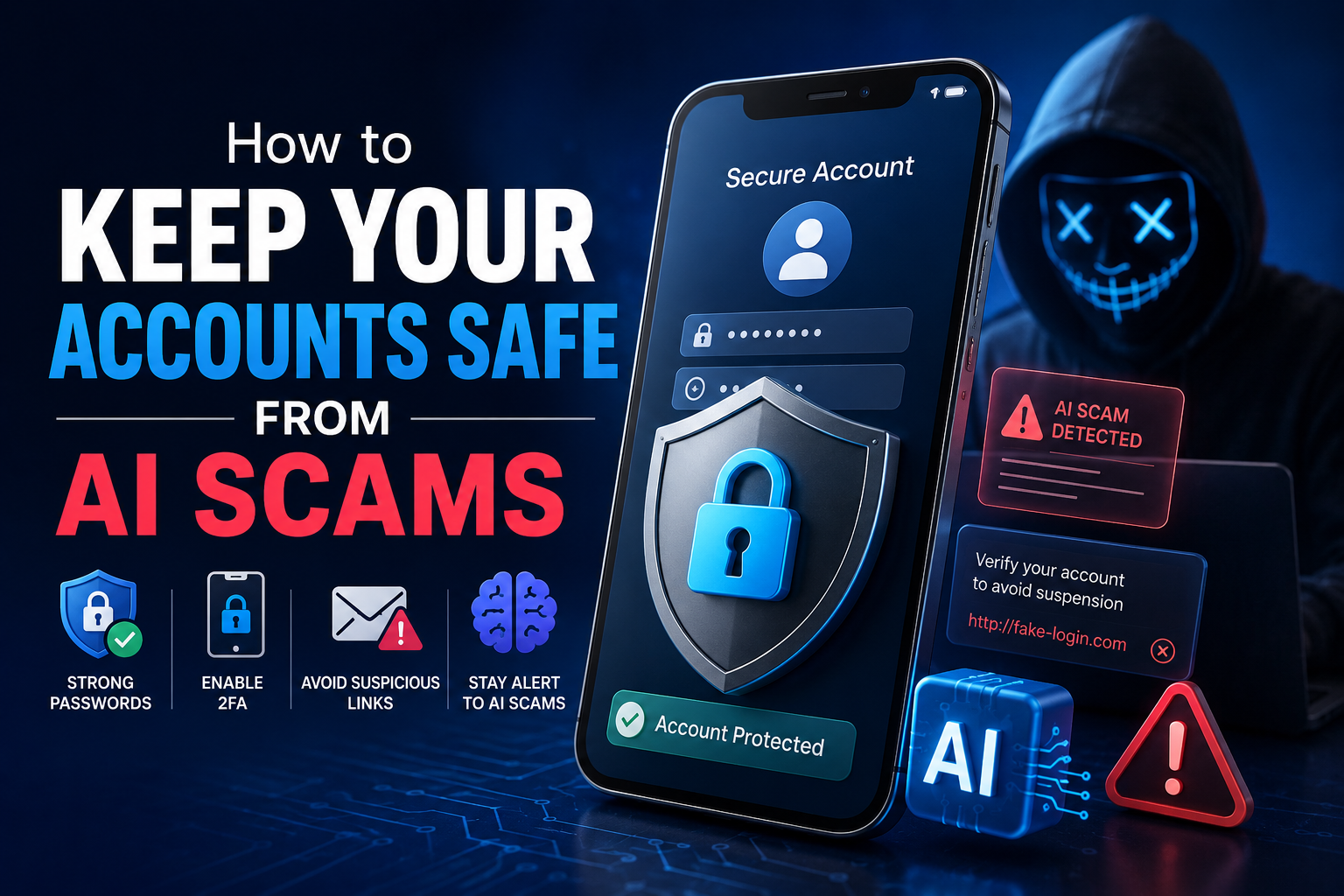
Technology Is The Internet’s Newest, Widest Way of Life. Users Are Utilizing The Internet for Work, Shopping, Learning New Things, and Staying in Contact with Family and Friends. The Internet is Constantly Growing and Changing With New Technologies Such As Artificial Intelligence. It important to know how to keep accounts safe from AI scams that target email, social media, banking, and work accounts. AI Allows Users To Create Messages, Produce Original Images, Mimic Voices, and Generate Life-Like Videos. AI is Also Being Used by Criminals to Create Dangerous And Harmful Online Scams.
AI Scams Are More Dangerous Then Old-Fashioned Scams Because They Are More Realistic. Scammers Send Email Messages Via AI That Appear to Have Come From Legitimate Sources. AI-Generated Messages Look Normal; On The Other Hand, Voice Recordings Sound Like Familiar People; And Finally, AI Generated Videos Look Convincing. As A result Of The Realistic-looking Nature Of AI, Many Victims Lose Access to Their Email Accounts, Social Media Accounts, Bank Accounts, And Work Accounts. Becoming Familiar with The Mechanics of AI Scams Is The First Step to Being Able to Recognize and Avoid Them.
What Are The Different Types of AI Scams
AI Scams Use AI To Deceive People Over The Internet. AI Can Be Used By Scammers To Generate Emails That Look Legitimate and Authentic. Scammers Using AI Can Imitate Writing Styles, Tones, Verbiage, and Even Include Specific Information That Would Prove An Authentic Message. Using AI, Scammers Can Create Mosses Making Phone Calls Pretending They Are Your Boss, Family Member, Bank Employee, or Representative From Your Bank. Because Scammers Are Able To Generate Sounds That Look Like Human Speech Patterns and Sounds, It’s Very Difficult For People To Identify An AI-generated Scam.
Most common AI Scams
The most commonly seen type of AI scam is the use of fake emails. These emails often appear to come from reputable companies, such as providers of email services, online shopping stores, and banks, and generally state that you have some sort of an issue with your account. These emails typically include a link for you to click on, and once you click the link, you are led to a falsified website that looks similar to the company’s actual website. When the user inputs his or her login password into the website, it is stolen by the scammer.
A second common type of AI scam is social media-based scams. Often, a person will receive a message from someone that indicates that they are a friend or acquaintance, and they will request help or assistance in the form of money. Since these messages are typically created with the aid of AI technology, the scammer uses information from the friends’ social media accounts to copy how the friends speak to one another. Many individuals will trust these types of messages and reply to them without thinking twice.
Voice phishing is another rising trend. The scammer makes a telephone call and presents himself or herself as someone that the victim already knows. Typically, the scammer indicates that there has been an emergency, and that the victim needs to provide the scammer with either money, or a number. In this case, the AI tools allow the scammer to be able to make calls with the same resemblance as someone that the victim already knows.
Common Types of AI Scams
Fake emails are among the most frequent AI scams. Typically, they appear to be from reputable companies, such as email providers, online retailers and banking institutions. The message informs the recipient that there is an issue with their account and instructs them to click on a link provided in the message. When the individual follows the link, it directs them to a fraudulent website that mimics the legitimate company’s site. After the individual submits his or her password on the fraudulent site, the hacker gains access to the account.
Social media is another platform where AI scammers operate. You may receive a direct message from someone who appears to be a trusted friend asking for assistance or donations. Scammers leverage AI tools to duplicate their friend’s typical communication style and mannerisms. As a result, many victims blindly respond to these messages without giving them a second thought.
Why Strong Passwords Matter
Your password is the first line of defense for all your accounts. If you have a weak password, it makes it that much easier for someone to access those accounts. Most people still choose extremely simple passwords, like their first name or date of birth, which are very easy to guess.
A password should be long and not reused on other accounts. If you lose access to one account, you should still have the remaining accounts if they are all protected by individual passwords. Combining both letters and numbers provides added protection, but the key component is for each password to be unique.
There are many great password manager applications available today that offer ways to securely save passwords as well as reduce the temptation to reuse them.
The Importance of Two-Factor Authentication
Two-factor authentication provides an added level of security for all your online accounts. Even if a hacker manages to gain access to your password, they would still need to enter a second code that is sent either via SMS or generated through an application on your mobile device.
While many individuals choose to skip this step due to its “inconvenience,” it is, in fact, one of the most effective ways to keep your online accounts protected from cybercriminals. Two-Factor Authentication prevents numerous attacks from occurring by stopping them at the onset before any damage occurs.
If at all possible, try to use the authentication applications instead of receiving a text message, as the former are deemed safer than the latter.
Pay Attention When Clicking Links or Opening Attachments
The majority of accounts that have been hacked begin with one simple click of a button. Click bait is usually a link or attachment that was created specifically by a scam artist. They create fake-looking links that appear to be legitimate but lead the user to a fake website.
Before you click on any link, stop and check who sent it to you. Then examine the website address very carefully. If anything appears to be out of the ordinary, do not click on the link. Instead, open up a new tab in your browser and go directly to the legitimate website themselves.
Attachments can also be dangerous because they can contain malware or programs that will steal information from your computer. It is best to avoid opening any attachments that were sent to you from someone you do not know. You should also continue to be cautious about attachments you receive from people you recognize as well.
Tips for Identifying Fake Messages
There are still warning signs, even when using Artificial Intelligence (AI). Many messages will use fear tactics to create urgency or compel you to make hasty decisions. You may receive a message stating that your account will be locked or that you will lose your money if you do not act immediately. The intent of these messages is to cloud your judgment.
Another huge warning sign is a request for passwords, codes, or payment information. Legitimate companies do not request this type of information via message.
Lastly, if you receive a message that feels suspicious, go with your initial instinct to verify before proceeding.
Keeping Your Email Safe
Email accounts provide access to everything we do online & provide access to password reset options. So having access to your email allows someone access to most of the rest of your accounts!
Create a Strong, Unique, and Difficult To Guess Password For Your Email Account. Also Enable Two-Step Verification (2FA) For Your Email Account. Check Your Recovery Email Address & Phone Number To Make Sure They Are Correct.
Only Give Your Email Address To People You Trust And At Reputable Businesses. The More People/Places You Provide Your Email Address To = More Chances For Scammers To Try To Hack You.
Keeping Yourself Safe On Social Media
Scammers Use Hacked Social Media Accounts To Scam Friends/Family Members Of The Victim. A Hacked Social Media Account May Lead To The Victim Losing Trust And Reputation.
Make Your Social Media Profile Private If Possible. Avoid Putting Personal Information (Like Phone Numbers, Birth Dates, Travel Plans) On Social Media. Scammers Take This Information To Make Their Messages Seem More Credible.
Check The “Login Alerts” Feature And View Active Sessions On Your Social Media Account Regularly. If You See Any Logins You Didn’t Recognize, Take Action Immediately Change Your Password And Sign Out Of All Other Devices.
Protecting Your Banking and Payment Accounts
Your banking and payment accounts require additional attention and protection. Do not click bank links from e-mail or message correspondence. Banks typically ask customers to log in using their official mobile app or website.
Regularly check your account activity for transactions; even a very small unknown transaction could be an indicator of something wrong and you should report any irregularities immediately.
Do not share a one-time code with anyone, even if the call or message appears legitimate. Banks NEVER ask for these codes on the telephone or through message.
Educating Family About AI Scams
Not everyone is aware of how sophisticated AI scammers have become. Most typically, older generations and young users fall under their target demographic. Therefore, open discussions on the topic can help prevent your loved ones from falling victim to these scams.
Be sure to explain to people that both video and audio content can be fabricated; help them learn to verify that there is actually an emergency before accepting an urgent request; and encourage them to ask questions rather than rush into action.
You could also provide specific examples of actual scams and how they have affected others to help illustrate the risks involved.
What to Do If an Account Is Hacked
If you believe that someone has hacked your account, you need to move quickly. The first step should be to change your password immediately and log out of every device that you have used.
Next, it’s essential to check all your account settings for changes. For example, investigate any new or unfamiliar recovery emails then delete any that do not belong to you; this could help prevent future unauthorized access to your accounts.
Finally, reach out to the service provider for assistance with recovering your account; most platforms have a procedure for recovering hacked accounts. Also, alert your friends and/or contacts of the possibility that they may have received a scam message from your account; by doing so, you can stop the spread of scams.
Awareness and Patience Are Your Best Weapons Against AI Scams
Awareness is your most powerful tool when it comes to protecting yourself against AI scams. When you know that an AI scam exists, you will be better able to identify when you are being scammed.
Additionally, practice patience. Scammers want you to react quickly. Taking a moment to consider the situation can allow you to stop a scam.
The Future of AI Scam Technology
AI will continue to advance, but scam technology will also continue to improve. Advances in technology will provide users with greater security and safety when using their accounts. By remaining educated about potential scams, as well as exercising caution and vigilance, users will have an additional layer of safety and protection. While technology is important in protecting online accounts from scams, it does not replace the importance of human vigilance.
Conclusion
AI scams are a problem, but they can be avoided with some easy-to-follow good practices. Using strong passwords, enabling two-factor authentication, and practicing caution in Internet use can help keep your online accounts safe from being scammed. Be careful not to act on any suspicious messages without confirming their authenticity. Take the time to confirm the legitimacy of the message before taking action. Ultimately, protecting your online account also protects your money, private information, and peace of mind.